Choosing the Right Watercolor Girly Summer Clipart for Professional Results
Summer design projects thrive on warmth, nostalgia, and a touch of whimsy. Whether you are creating beach party invitations, designing sublimation prints for tote bags, or assembling digital planner stickers, the visual assets you choose define the tone of your final product. Watercolor Girly Summer Clipart has become a staple for creators who want to capture that soft, feminine aesthetic without spending hours painting each element by hand. This collection typically features hand-painted style illustrations in soft pinks, corals, creams, and greens, offering a fresh look that appeals to a wide audience.
However, many beginners and even experienced designers overlook critical technical and stylistic details when selecting these graphics. Choosing the wrong file type, ignoring resolution limits, or mismatching color palettes can lead to pixelated prints, muddy colors, and wasted time. Understanding what to look for before you download or purchase ensures your creative workflow remains efficient and your final products look polished.
The Resolution Trap: Why 72 DPI Is Not Enough
One of the most common mistakes creators make is assuming all digital images are suitable for printing. Many free or low-quality clipart sets are saved at 72 DPI (dots per inch), which is standard for screen display but disastrous for physical products. If you attempt to print a 72 DPI image on a mug, t-shirt, or invitation card, the result will appear blurry, pixelated, and unprofessional.
High-quality Watercolor Girly Summer Clipart should always be provided at 300 DPI. This resolution ensures that the delicate brushstrokes and soft edges characteristic of watercolor art remain crisp when scaled down for stickers or enlarged for wall art. Before purchasing or downloading, always check the file specifications. If the seller does not explicitly state 300 DPI, assume it is not print-ready. For digital-only uses, such as social media posts, 72 DPI is acceptable, but having high-resolution files gives you the flexibility to pivot between digital and physical products without needing to source new assets.
Background Transparency Matters More Than You Think
Another frequent oversight involves file formats. JPEGs are compact and easy to share, but they do not support transparent backgrounds. If you use a JPEG clipart image with a white square background, you will spend valuable editing time trying to remove that background in software like Photoshop or Canva. Even with advanced tools, removing backgrounds from soft watercolor edges can result in jagged lines or lost detail.
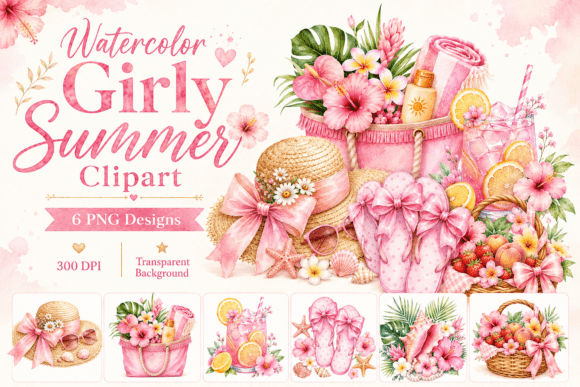
Ensure your clipart collection includes transparent background PNG files. This format allows you to layer elements seamlessly over colored backgrounds, patterns, or photos. For example, placing a straw hat with a pink bow directly onto a textured paper background for an invitation requires transparency to look natural. Without it, the design looks stiff and amateurish. Always verify that the PNGs have clean edges and no residual white halos around the illustrations.
Cohesion vs. Clutter: Curating Your Palette
While individual elements like a beach bag with tropical flowers or a pink lemonade drink may look charming on their own, combining them requires a keen eye for color harmony. A common error is mixing clipart from different artists or collections that claim to be "summer-themed" but use conflicting color profiles. One set might use cool, icy blues, while another uses warm, coral-heavy tones. When combined, these clashes create visual dissonance rather than a cohesive design.
The best Watercolor Girly Summer Clipart collections are curated with a unified palette. Look for sets that consistently use soft pinks, corals, creams, and leafy greens. This consistency allows you to mix and match elements—such as pairing bow flip flops with a seashell floral arrangement—without worrying about color mismatches. If you must combine assets from different sources, use color adjustment tools to align the temperature and saturation of the images, but starting with a cohesive set saves significant editing time.
Licensing: The Hidden Cost of "Free" Graphics
Many creators, especially small business owners and digital product sellers, underestimate the importance of licensing terms. Using clipart for personal projects is vastly different from using it for commercial goods. Some licenses permit use on printable invitations but prohibit use on physical products like mugs or tote bags via sublimation. Others may require attribution or limit the number of units you can sell.
Always read the license agreement before incorporating any asset into a product you intend to sell. If you are creating digital planners, stickers, or party decor for clients, ensure the license covers commercial use. Ignoring these terms can lead to copyright strikes, account suspensions on platforms like Etsy or Amazon KDP, and legal complications. Investing in properly licensed assets protects your business and builds trust with your customers.
Practical Applications and Best Practices
To maximize the value of your clipart collection, consider how each element can be repurposed across different mediums. Here are practical ways to apply these designs effectively:
- Invitations and Stationery: Use the straw hat with sunglasses and the tropical seashell arrangement as corner accents on summer birthday invites. The transparent PNGs allow these elements to frame text without obscuring it.
- Sublimation Products: The pink lemonade drink and summer fruit basket designs work well on white or light-colored mugs and tote bags. Ensure your design software is set to CMYK color mode if required by your printer to maintain color accuracy.
- Digital Planners and Stickers: Scale down the bow flip flops and beach bag elements to create functional dashboard icons or decorative stickers. High-resolution files ensure they remain sharp even when resized significantly.
- Wall Art and Decor: Combine multiple elements, such as the floral arrangements and fruit baskets, to create a larger composite piece for nursery or bedroom wall art. Layering these soft watercolor textures adds depth and interest.
What to Check Before You Buy
Before committing to a purchase, perform a quick audit of the product listing. Look for previews that show the clipart on both white and colored backgrounds to verify transparency. Check the file count; a robust collection should offer variety, such as the six distinct designs mentioned earlier, including accessories, drinks, and floral elements. Read reviews from other buyers, specifically looking for comments on ease of use and image quality.
Additionally, consider the versatility of the elements. A collection that includes both standalone items (like a single seashell) and composed scenes (like a full beach bag setup) offers more creative flexibility. This allows you to build custom compositions rather than relying on pre-made layouts that may not fit your specific design needs.
By paying attention to resolution, file format, color cohesion, and licensing, you can avoid common pitfalls and elevate your summer design projects. Watercolor Girly Summer Clipart is a powerful tool for creators, but its effectiveness depends entirely on how wisely you select and apply it. Choose quality over quantity, respect intellectual property rights, and let these soft, feminine illustrations bring a touch of seasonal charm to your work.